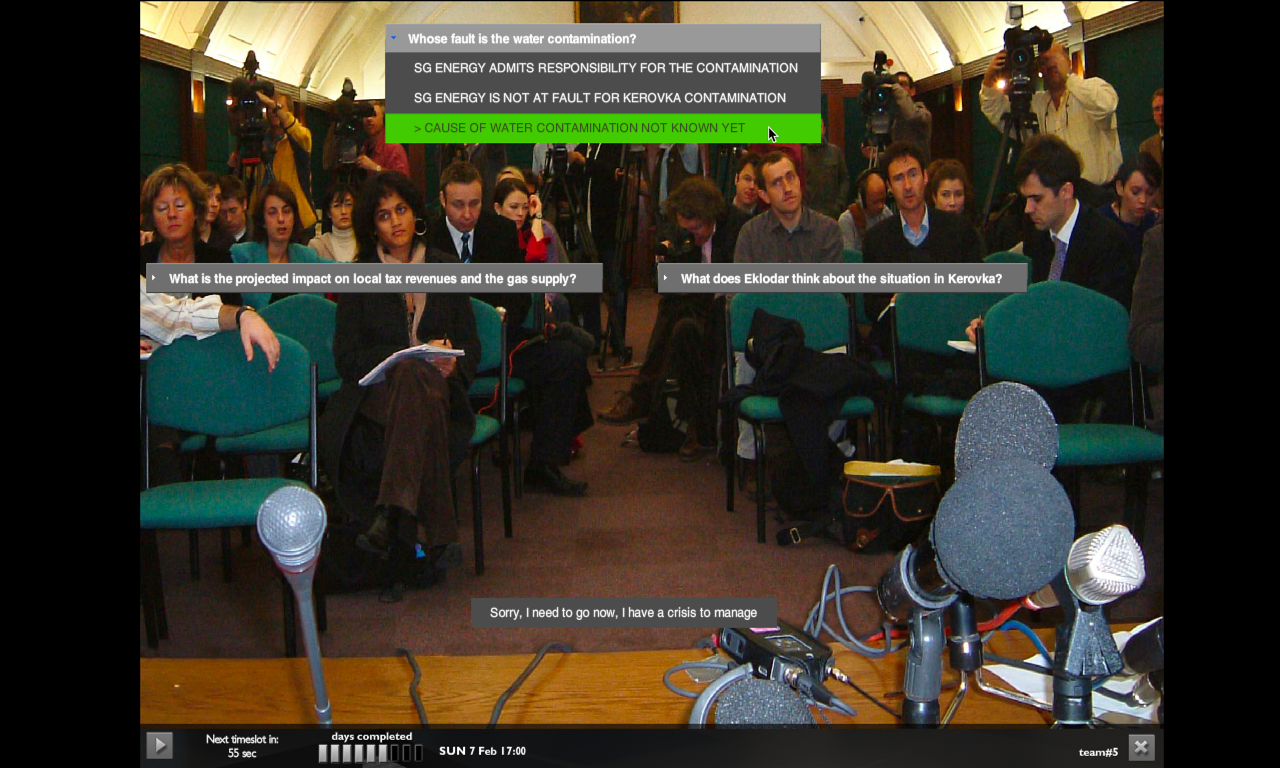
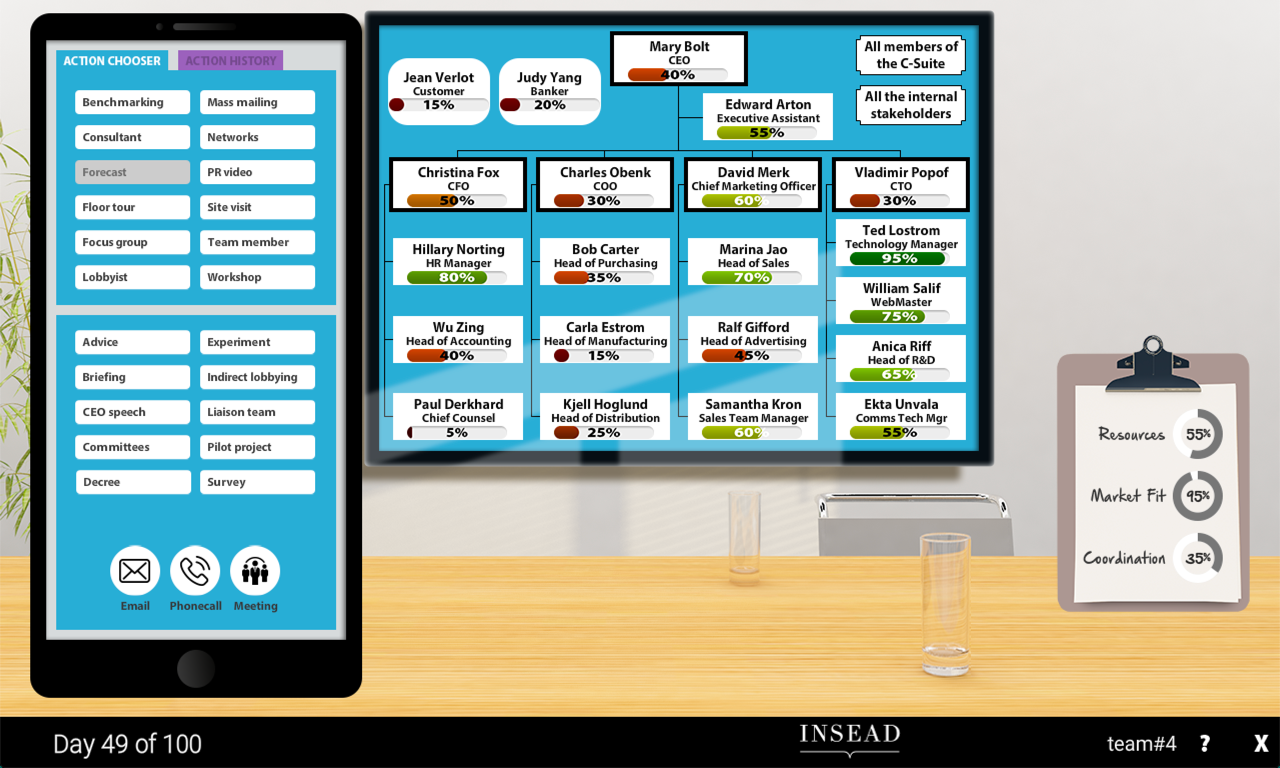
The challenge of... decision making in complexity
Leaders take decisions. They take strategic decisions. They take tactical decisions. In a world and in a business environment characterised by volatility, uncertainty, complexity, and ambiguity (“VUCA”), taking the right decision is crucial, but difficult. There are usually no ‘right’ answers.
Organisations often articulate their approach to this challenge as…
- prioritisation
- making choices
- resolving dilemmas
- judgment and decision making
- develop and implement strategies
- execute & formulate strategies
- scenario planning
- managerial decision making
- strategic decision making
- decision-making techniques
- decision making processes
 Definitions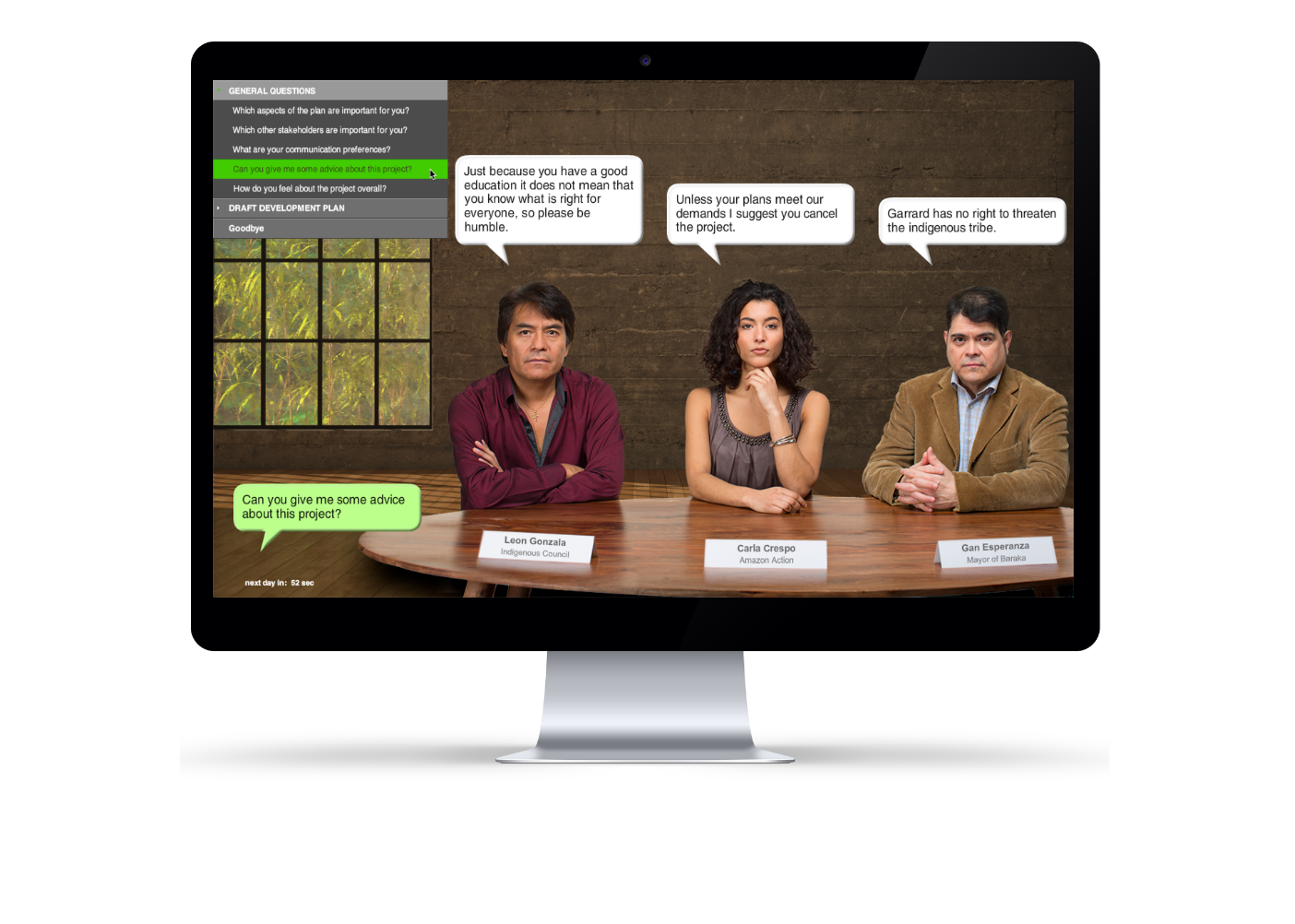
Find a solution for your challenge
Our range of pioneering simulations address the needs of modern leaders, offering engaging and effective learning.

Decision Making and Complexity can be defined as…
“Decision-making” can be defined as “the cognitive process resulting in the selection of a belief or a course of action among several possible alternative options. It could be either rational or irrational. Decision-making process is a reasoning process based on assumptions of values, preferences and beliefs of the decision-maker. Every decision-making process produces a final choice, which may or may not prompt action.”
(Wikipedia)
“Complexity” characterises the behaviour of a system or model whose components interact in multiple ways and follow local rules, meaning there is no reasonable higher instruction to define the various possible interactions. The term is generally used to characterize something with many parts where those parts interact with each other in multiple ways, culminating in a higher order of emergence greater than the sum of its parts.
(Wikipedia)

- Information overload
- analysis paralysis
- time pressure
- cognitive biases
- team dynamics
- personal biases
- emotions
- decision fatigue
Decision-making in complexity
Scope choices
Time vs cost tradeoffs
Risks: whether to reduce probability and/or impact or neither
Project outcomes vs business outcomes tradeoffs
How to prioritise the stakeholders
How and what to communicate
What outcomes to prioritise
How to compromise
Real world challenges
Prendo’s customers face many challenging situations when decision making in complexity:
Advanced simulations can help leaders address these real world challenges
At Prendo, we believe that the complex skills and deep understanding that are needed for decision-making in complexity are best developed with advanced simulations that provide accelerated experiential learning and the opportunity to explore the underlying cause and effect models.
Talk to us to understand if our simulations can address your specific challengesLearning to make decisions in complexity
To address the challenge of decision making in complexity, in other words in a volatile, uncertain, complex and time-pressured context, leaders need a combination of skills (know-how) and understanding (know-that), in the same way that the driving test combines the practical and the theory:
leaders need to be able to…
- use the final objectives as the basis for decision making
- gather information, ask the right questions
- develop and brainstorm alternatives
- identity and weigh up the pros and cons of different options
- counter innate ‘optimism’ and other decision biases
- manage unexpected changes, risk and uncertainty
- determine appropriate preventative, mitigating and contingency actions
as part of an overall approach to decision making in complexity
leaders need to understand…
- probability and impact of risks
- all the possible decision biases and traps